
Biodanza IV: Affectivity
Tough love. Life and death in Sweden.

Reading time: 10 minutes
“Love is the highest expression of life. Through love, we grow beyond ourselves.” Rolando Toro
Dear reader!
We have now come to love in the Dance of Life! Affectivity.
I wasn’t planning for this longer post to be published on Valentine’s Day. It just happened that way. It was meant to be!
For new readers: This is part IV in the series of posts on Biodanza – a method involving free dance and movement to music for increased well-being, founded by the Chilean anthropologist Rolando Toro.
My series of posts deals with the philosophy behind Biodanza, which consists of five vivencias (experiences) that, according to Toro, are fundamental dimensions of human existence.
We have discussed: vitality, sexuality, creativity.
And now only Love and God remain! (If you dont’ like the word God, don’t worry. In Biodanza it’s called transcendence).
All my posts on Biodanza are also available in Swedish here.
Trigger warning: Tough Love
This post contains some social criticism. It deals with things I have observed over many years in our society.
In conversation with Rosario Hernández, it becomes clear that my observations and experiences largely correspond with hers.
Those of us who have extensive experience abroad from many countries, we see the contrasts.
I want to make it clear that the social criticism is mine, not hers.
This is a conversation about love and kindness. It is about everything from love of country, to healthy self-esteem, to love for our fellow human beings.
My intention is to provoke thought, nothing else.
We will be talking about collective differences in mentality and the reasons behind them. Not individuals.
Now, let’s continue the dialogue with Rosario Hernández, Biodanza instructor in Stockholm.
What is affectivity in Biodanza?
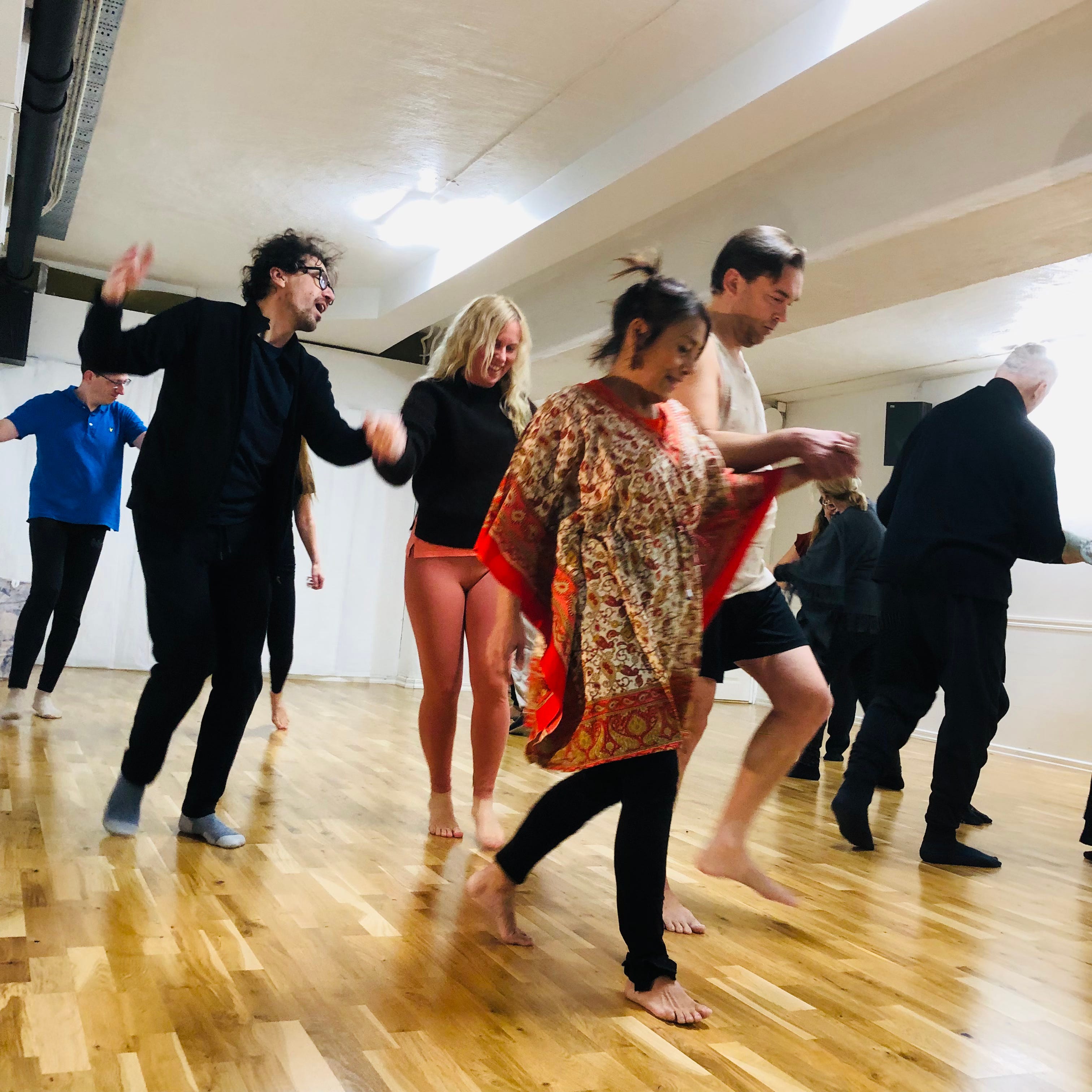
Affectivity is the ability to form close bonds with other people.
It is the glue between people.
Rolando Toro defined affectivity as the human biological ability to form bonds: a deep emotional connection with others characterized by love, empathy, and care.
Toro thus saw affectivity as a biological function, not moral or cultural, but evolutionary, instinctive, and necessary for survival.
Without affective bonds, humans become sick, isolated, and fragmented.
Toro’s definition of love as biologically necessary, and not as some kind of luxury, feels completely true.
The strongest line in Biodanza is love. It is central!
Everyone knows that the most important thing in humans is love: to be able to love and be loved.
And that is also the definition of Biodanza in purely scientific terms.
What is the definition of Biodanza?
Biodanza is a method and a system for human integration and organic renewal.
In Biodanza we are relearning empathic functions and emotional aspects of human beings. A relearning of original and instinctive functions in life.
We humans need to care for each other—that is affectivity.
More and more MD:s are researching this topic!
Yes, Kerstin Uvnäs Moberg is a gynecologist and researcher here in Sweden. She was the one who discovered the healing effects of oxytocin.
What a mother secretes for her child is what we need to repeat every day to feel well.
She shows this in her films. Just by embracing someone, we get everything we need to feel like a living human being.
So, a hug every day can be enough to keep the doctor away.
Yes, exactly. We need a continuous repetition of the empathic hormone.
Then there is differentiated and undifferentiated love.
What is meant by differentiated and undifferentiated love?
I can give my love to those I have chosen—my partner and my family. But we have a greater capacity than that.
I am created with the capacity to love everyone.
The goal of Biodanza is to achieve unconditional love, linked to an ethical approach, to nature, to everything.
If we start with a healthy love for ourselves – what does that look like in Biodanza?
Biodanza is about reparenting yourself.
You came into being thanks to your parents. But perhaps you grew up without enough love and support. Perhaps you have trauma.
Then you need to reparent yourself to experience that life is love in a new way.
In Biodanza, you experience security and you are cared for. The purpose is to repair and develop love – affectivity!
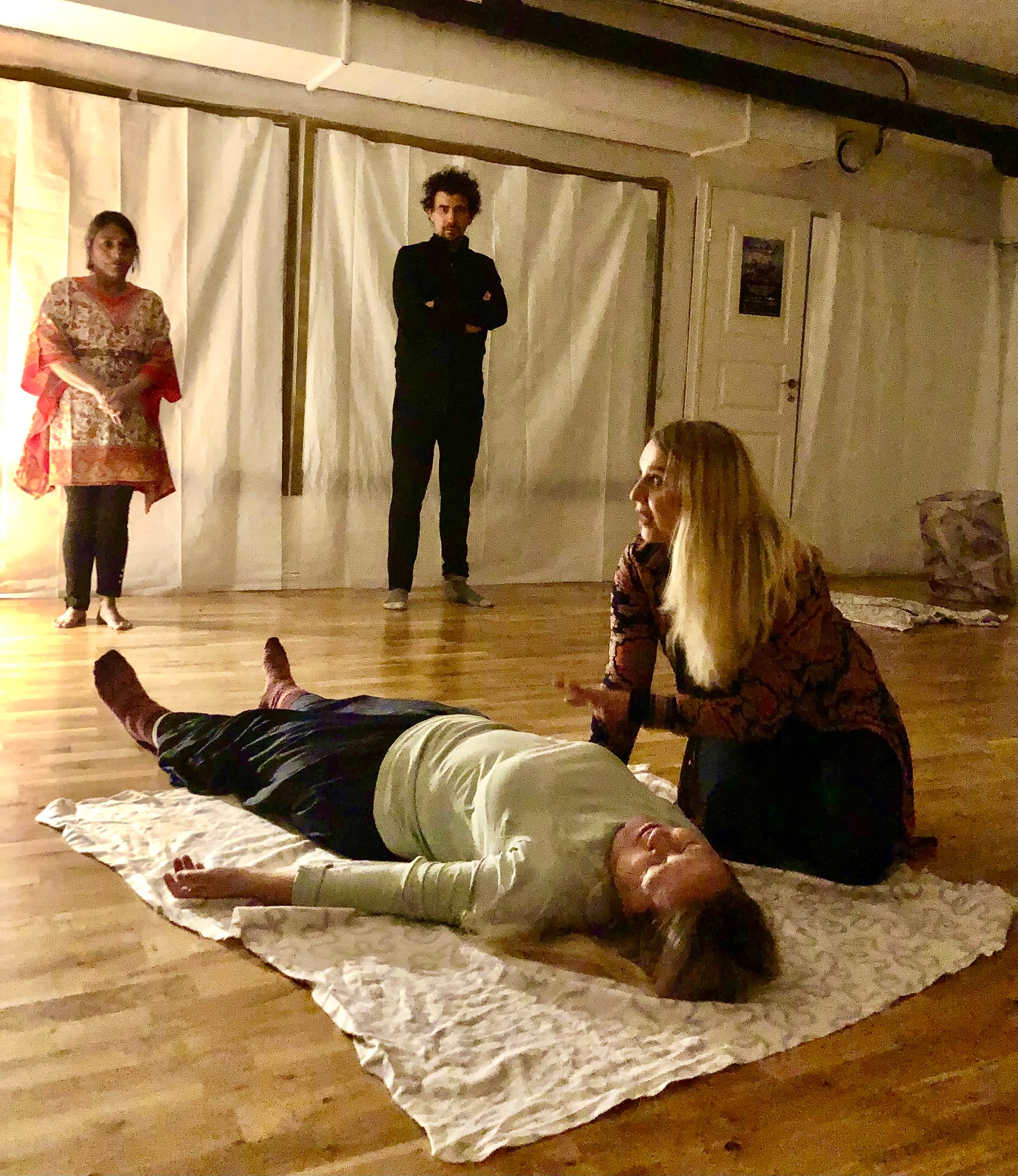
What does a Biodanza session look like?
We usually start by expressing our identity and creativity to the music in the first part.
The second part is more about relaxing, letting yourself go to the music until you start to come forward. There we are in safety and care.
The purpose there is to repair what is needed and/or to feel safe in community. Affectivity!
Love, respect, and acceptance of others is a challenge in the Dance of Life.
Yes, some participants stop doing Biodanza for that reason.
They stop when they meet someone they don’t like. Or because they think someone is too old and not very attractive.
Or because someone is sweating.
It is a challenge to be able to create a group with all ages.
As for sweating, that’s easy to fix (laughs). Showering and using deodorant is an easy way to show consideration for those around you, I think.
Yes, the line of affectivity is about everyone being in contact with each other. But there are also the ones who turn around at the door. They can’t stand being in a circle with others.
Fascinating.
Many people only want to socialize with others when they are young, beautiful, and attractive.
They want to meditate in stylish clothes at a safe distance from others.
But we can’t have segregation in Biodanza. We need to accept differences.
Biodanza is a school of humanity.
Yes, a woman who works as a diplomat said: Biodanza is human rights in reality!
That’s spot on.
Another challenge for many men is that Biodanza is a feminine method. They have to adapt to the feminine.
In what way is Biodanza a feminine method?
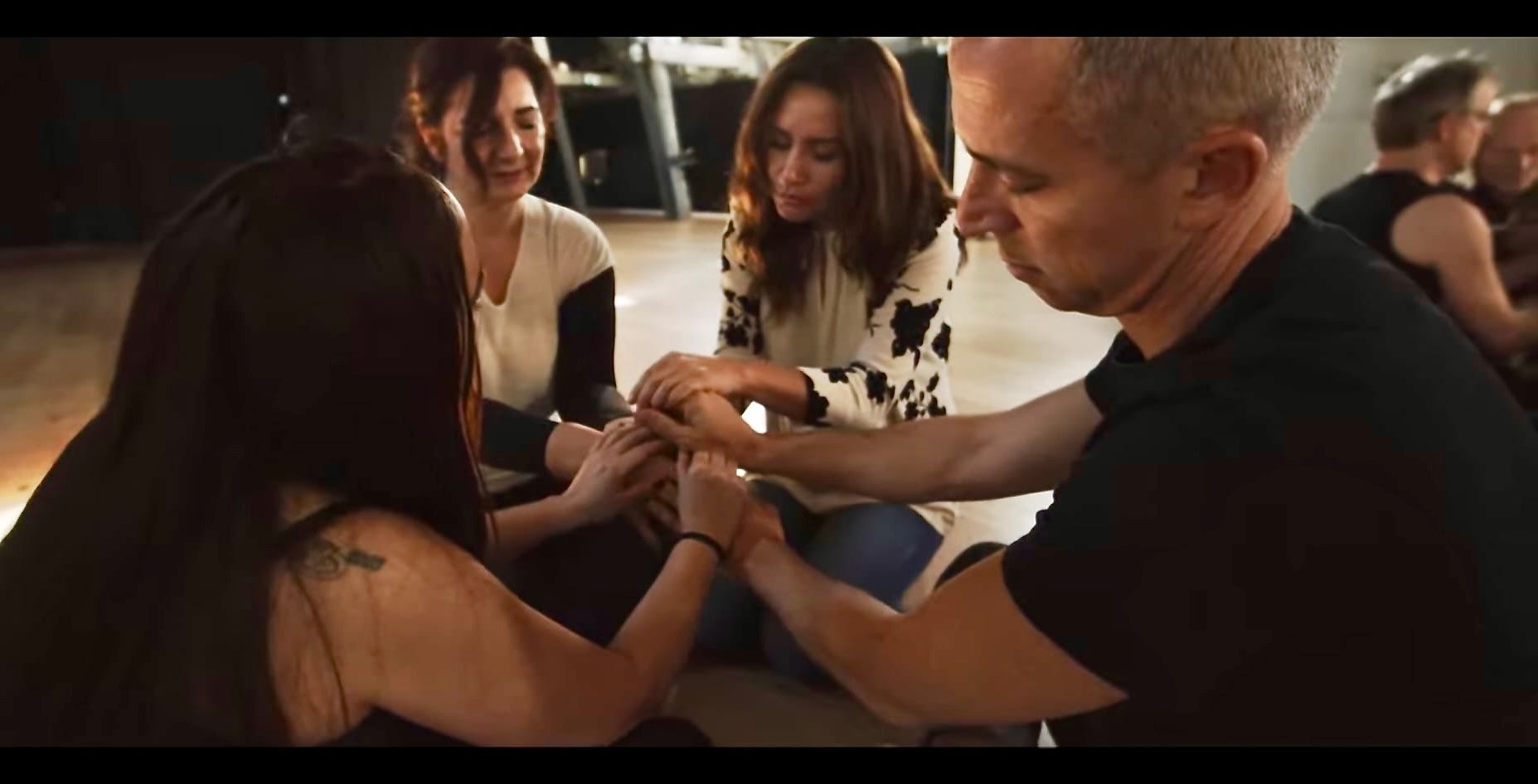
Biodanza is about relationship development.
You create a mini-community where you take care of each other and relationships develop with everyone—it’s very feminine.
And at the same time, there are both masculine and feminine elements in the dance. You express different archetypes, which is incredibly creative.
Exactly. And the basis of Biodanza is the encounter. We meet ourselves and others.
So, fundamentally, it is an affective or feminine method. A woman can love unconditionally and give everything.
It’s very interesting that you say that, Rosario. And you often mention caring and caretaking.
Caretaking is something that is neglected in Sweden, in my opinion.
It’s as if it’s always someone else, an institution, that is supposed to do it. And it starts with daycare and ends with so-called elder care.
When I came to Sweden, I worked in home care, and there I saw a great deal of isolation.
I worked for well-known authors and cultural figures in large, beautiful apartments in Östermalm and in the city center.
I was with an elderly woman who pointed out to me that she was important. “Don’t you know who I am? I’m famous. I’ve written books.” I had no idea, I was new to Sweden.
It was awful to see that literally no one cared about her. No children or grandchildren ever visited.
Exactly. No one showed her that she was important.
She spent day after day, year after year in isolation.
And unfortunately, this is not an isolated case. According to the Swedish Palliative Care Registry, one in four to five people die alone in Sweden, and the number is only increasing.
Documentaries have been made about this. Corpses lying in apartments for months before they are found because no one misses them.
It’s horrific and nothing less than a moral catastrophe. And it says a lot about society, how weak family ties and relationships are here.
And when the subject comes up, people almost always miss the point!
The debate always revolves around shortcomings in elder care, i.e., the government authorities. No one ever asks: where are the relatives?
Exactly. The people I worked for had children and grandchildren. But no one ever visited or got in touch. There was no contact!
This is not about Swedish culture. It is about the consequences of social engineering – state individualism, which has unfortunately enabled a great deal of complacency and selfishness in people. That is what we see.
Before we get into that, I want to say the following:
Sweden is a country with a lot to be proud of. I would even say that it has more to be proud of than many other countries.
In addition to a long history, Sweden has also been very innovative and skilled at creating prosperity and building a functioning society.
The problem, and what we are talking about here, is that when you essentially abolish family ties and outsource all care to such an extent that it becomes almost industrialized, it is now clear that this leads to a society with many insecure and lonely people.
The isolation of the elderly, but also the high level of mental ill health among young people, is a clear sign of this.
Yeah. At SFI (Swedish for foreigners), they told me that the state is more important than the family.
In all seriousness, did they say that?
Yes, they said that here in Sweden, if you have a problem with something, you should turn to the state, not your family. They said that! And it was in our course books.
I just thought: No way.
And that’s exactly the right attitude.
Yes, I mean: Who loves you? Who knows you? It’s your family. You always learn love through contact, not from an anonymous government agency.
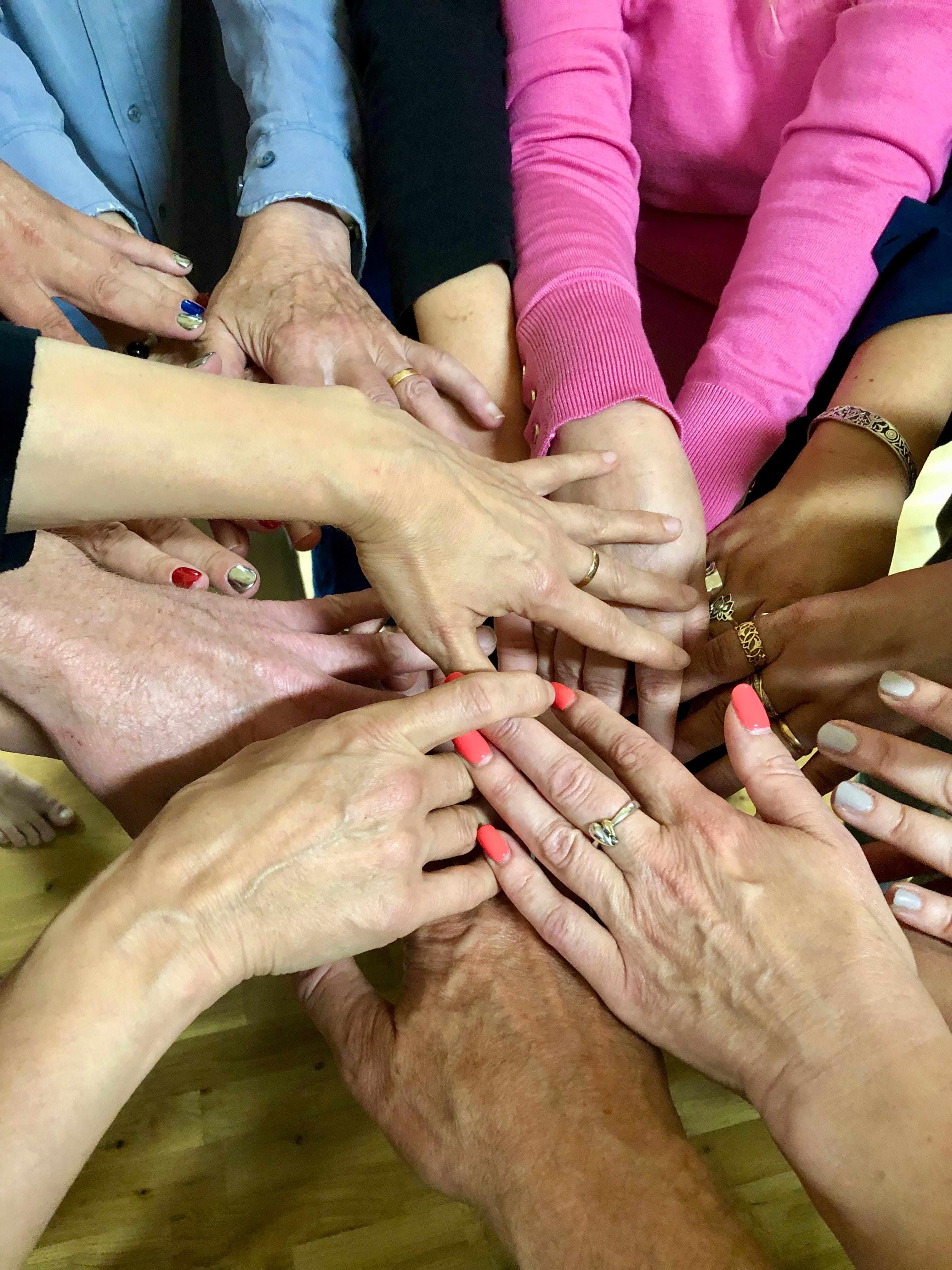
And those of us who have extensive experience abroad, from many countries, we see the enormous difference in attitude concerning all this.
I usually take my Italian brother-in-law as an example. When my father was in the hospital after suffering a cardiac arrest, my sister and her husband (my Italian brother-in-law) arrived the very next day. Immediately! We are all equally important to him because we are part of his family now.
And when my parents are in Italy, his commitment and care for them is out of this world. It’s just incredible!
I can imagine that.
And when I tell people this, they almost always ask if my Italian brother-in-law is “rich.”
And I never know how to answer that question. I don’t know how to explain that this isn’t primarily a monetary issue, but an issue of values.
And it’s not about him being perfect or his childhood being perfect.
It’s about him having been taught the right things. And that he comes from a culture where the right things still exist.
And this also applies to my experiences in Central Europe. It’s simply unthinkable that a grandmother should die alone. Or an aunt!
Yes, that is completely unthinkable in Spain too.
Affectivity - love - is not calculating, and it is not equality!
It’s about giving! And you give everything when you love someone.
It’s nice that you included the word equality there too, Rosario. It’s a word that has had a huge impact on Sweden.
Yes, I find that many people have difficulty giving of themselves.
Life isn’t a candy store where everything is just about what I want.
It’s also about wanting to give. And growing up. Generosity breeds generosity.
And it is precisely this—the care in big and small ways—that makes you feel like a queen when you are in continental Europe.
It’s all the small culturally conditioned gestures where men and women sometimes do slightly different things that make you feel important and appreciated.
And that is exactly the “glue between people” that you are talking about.
Yes, you feel that you exist!
Yes! And it’s not just family and close friends. It’s the taxi driver, it’s the woman at the bakery, it’s the man at the bank.
Everywhere I go, I experience a genuine interest in me as a person. And enormous creativity in helpfulness and service.
It’s about presence in the encounter.
Let me help you with your coat. I’ll drive you home. I’ll take care of this because you’re important to me.
Can I get you anything?
There is a spontaneity and self-evidence in it that is outstanding. People do it because they want to do it! It’s completely natural for them.
Saying that you care and actually showing that you care about someone are two completely different things!
It always takes me a long time to recover from all this when I come back to Sweden (laughs).
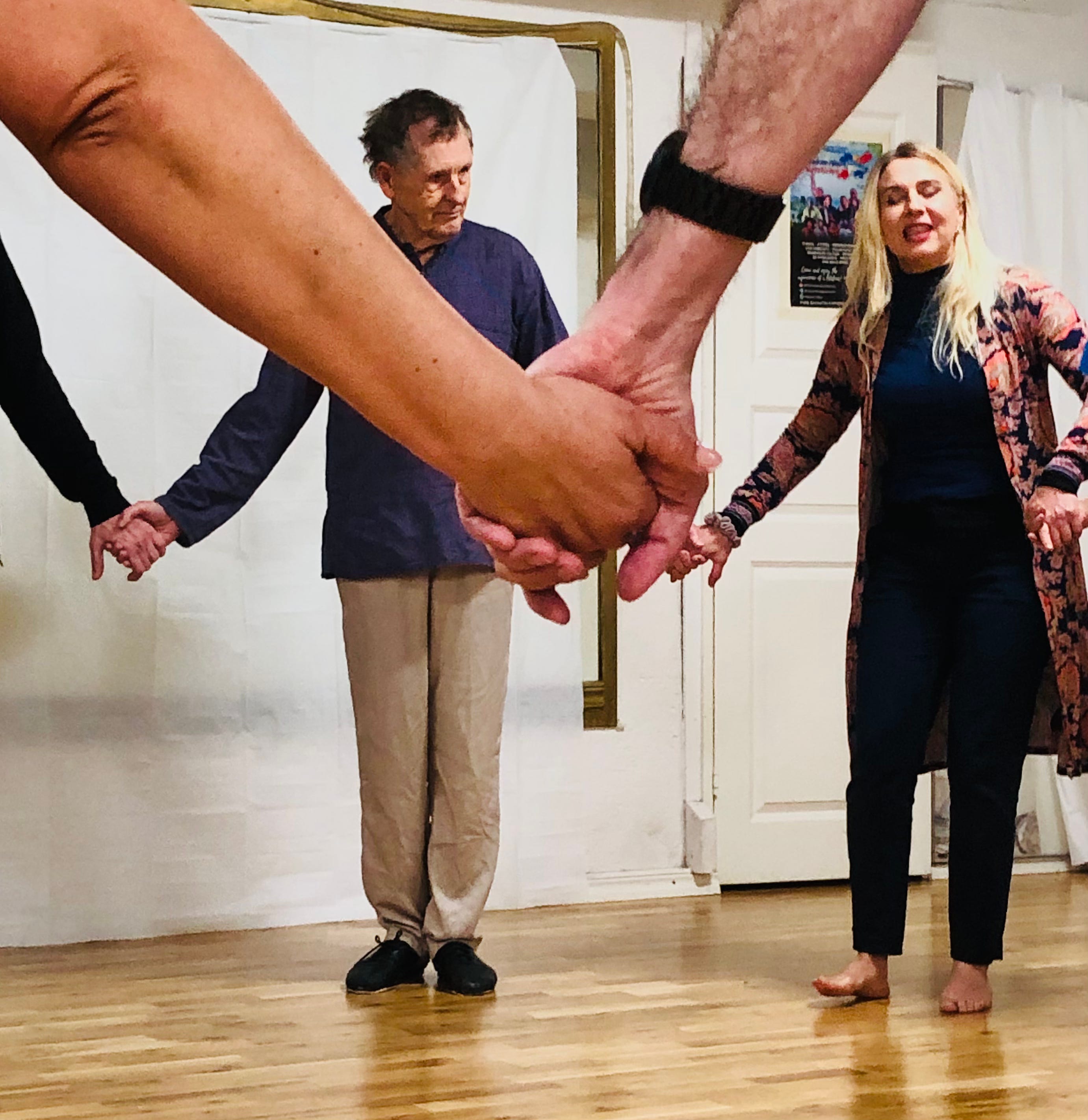
Yes, it’s the same in Spain. I recognize everything.
But I think that in a country as well-developed as Sweden, people are now beginning to seriously explore their existential health. They want to learn how to feel better.
I feel that people in Sweden want to find solutions.
In Biodanza, you learn to see each other and to take care of each other. It’s the way forward.
Totally. And last but not least, will you move back to La Rioia, Rosario? We need you here in Sweden.
I don’t know. It depends on my family and my daughter. Family is the most important thing. What about you, Andrea?
Well. Dying alone doesn’t sound very appealing (laughs).
But I don’t know if my old Chinese cabinet will survive another move abroad (laughs). I feel like I’m done moving. We’ll see. Like you say: family is what’s most important.
A lovely and perhaps unexpected song for your affectivity
Perhaps you have a different experience in your country? We look forward to your comments. Thank you for reading!
This is a conversation about love and kindness. It is about everything from love of country, to healthy self-esteem, to love for our fellow human beings...
Beautiful article, thanks!
Fantastic article Andrea, and a very important topic: LOVE❣️❣️ I think as I see it we have very much the same political system in Norway, Democracy. The State is important, and powerful. I would say actually too powerful. To care for other people is not something they teach in school. The most important is to be a good democrat. Do what the State say is right and important. It might be that peoples attitude and concern is changing but I am not too convinced . Thank you for sharing about Biodanza, I really like it🫶🏻🫶🏻